30 Sept 2026
An exclusive Mountain Jade collection of one-off art pieces created for the 2026 Ngā Tamariki-a-Tāne-Mahuta Collection, celebrating the beauty of Aotearoa’s native birds.
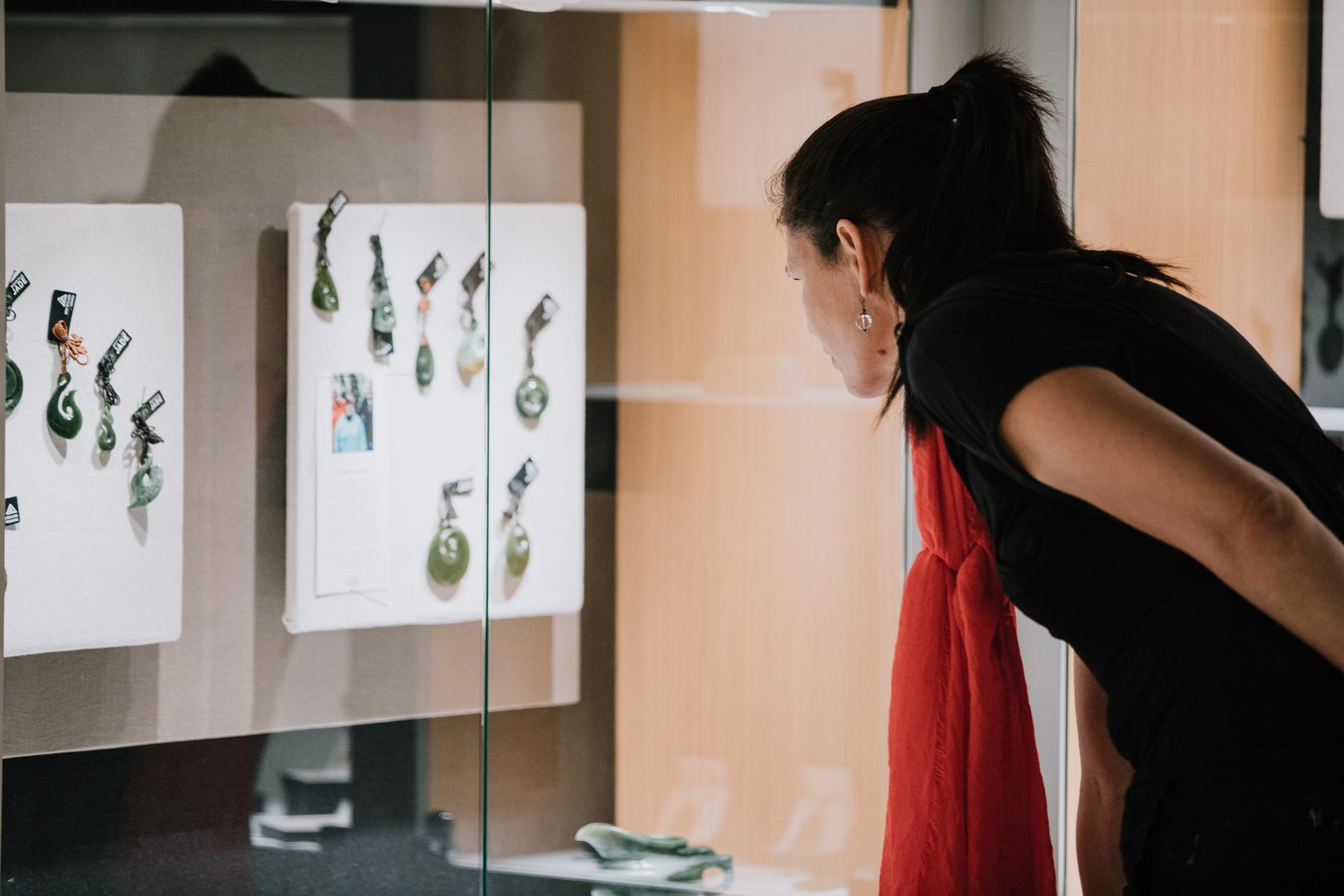
This collection will be on display in our Mountain Jade Store & Carving Studio at 1288 Fenton Street, from Thursday 01 October. Pieces may be purchased throughout the exhibition period and will be delivered once the exhibitions have concluded.
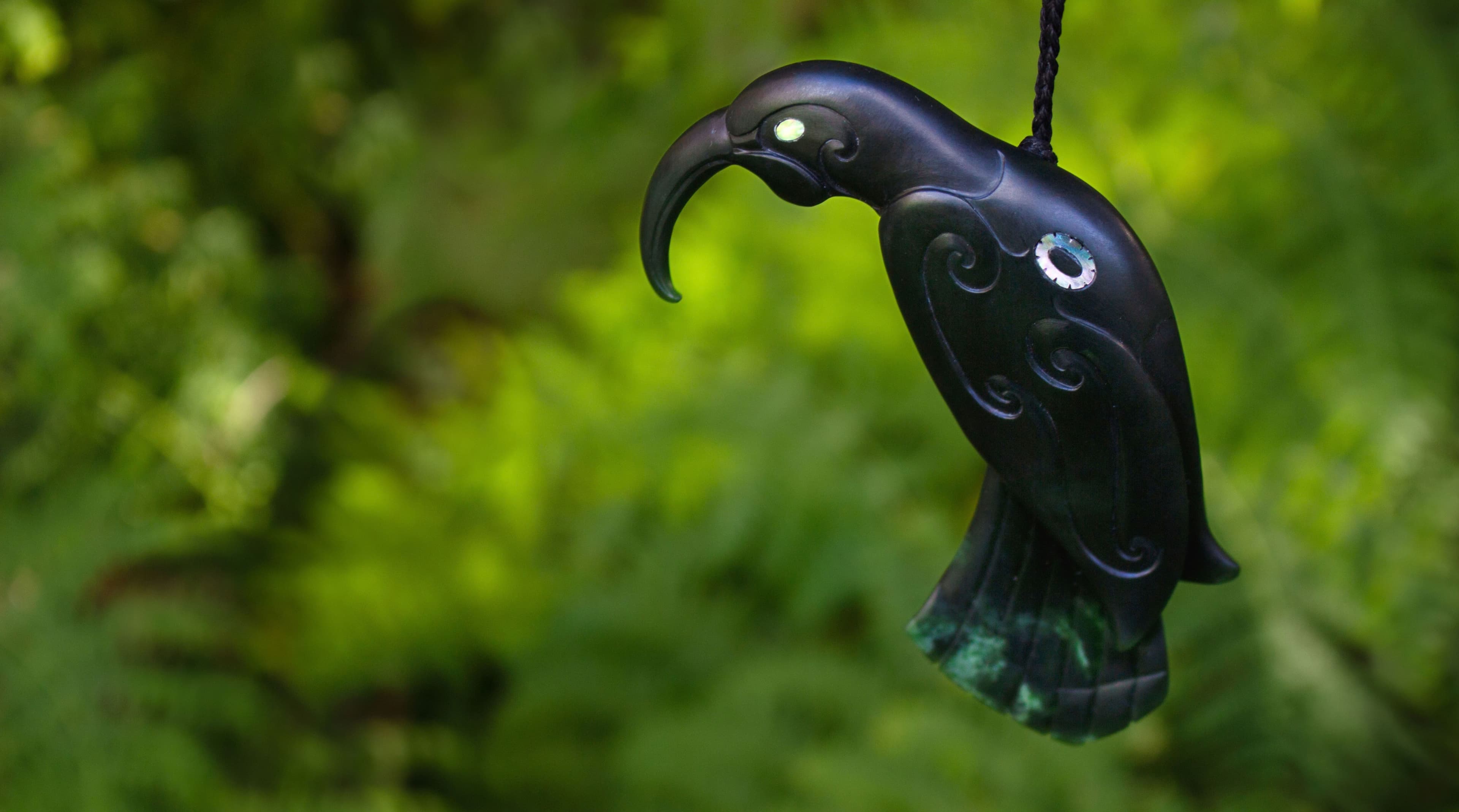
Within Māori tradition, Tāne Mahuta is the atua of the forest and birds. From Tāne came the many forms of life that inhabit the forest, including New Zealand's native birds. Tāne's children - the birds of Aotearoa, move between earth and sky, with their song and movements woven into the life of the forest.
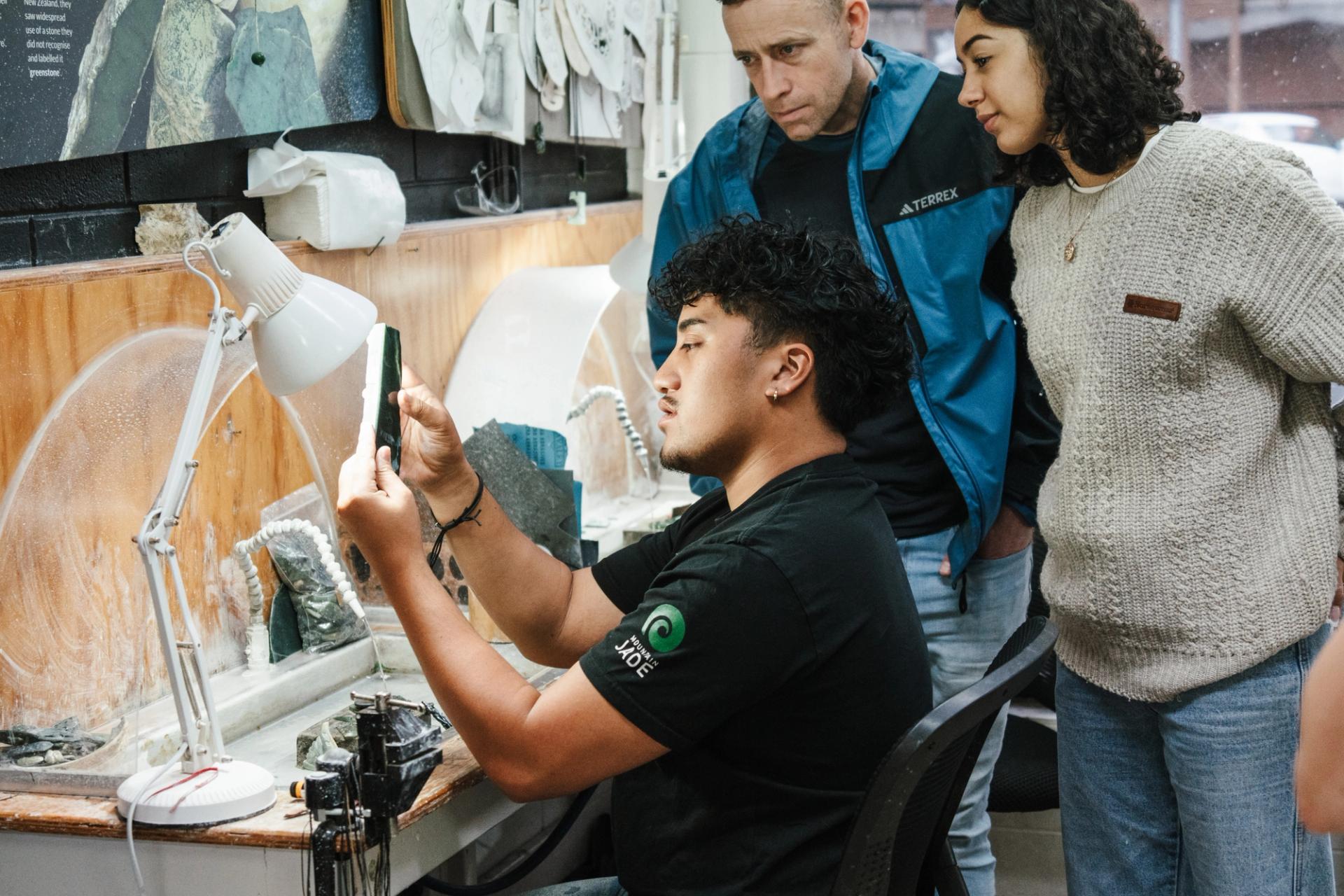
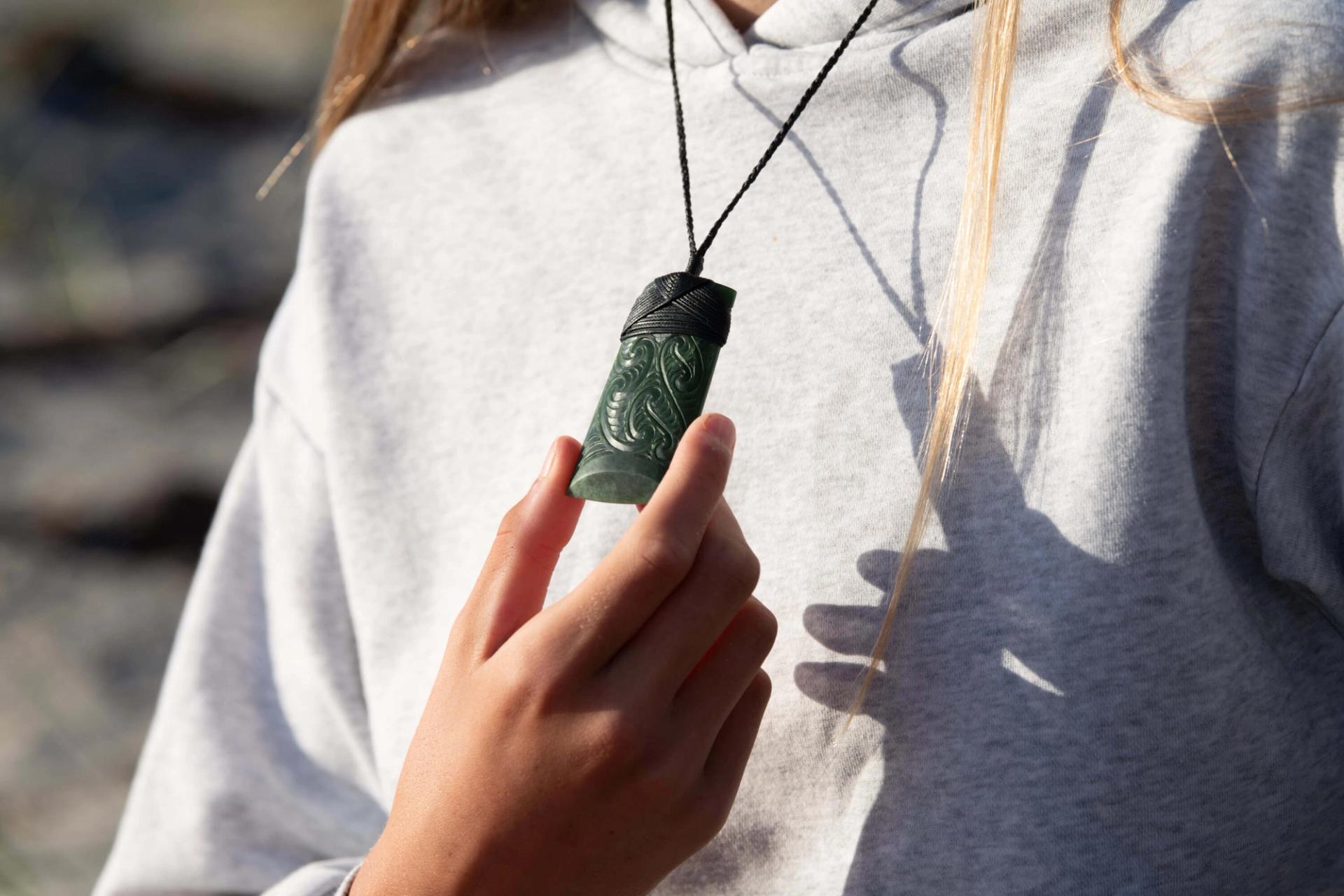
‘Ngā Tamariki o Tāne Mahuta’ draws inspiration from these children of the forest, each bird brought to life in pounamu and individually handcrafted by our collective of Māori carvers. Together, the collection reflects the diversity and character of Aotearoa’s manu, honouring the birds not only as creatures of the forest, but as part of the living relationships that connect the taiao to the people.
🐦 View remaining pieces available for purchase or view other pieces from these same artists.
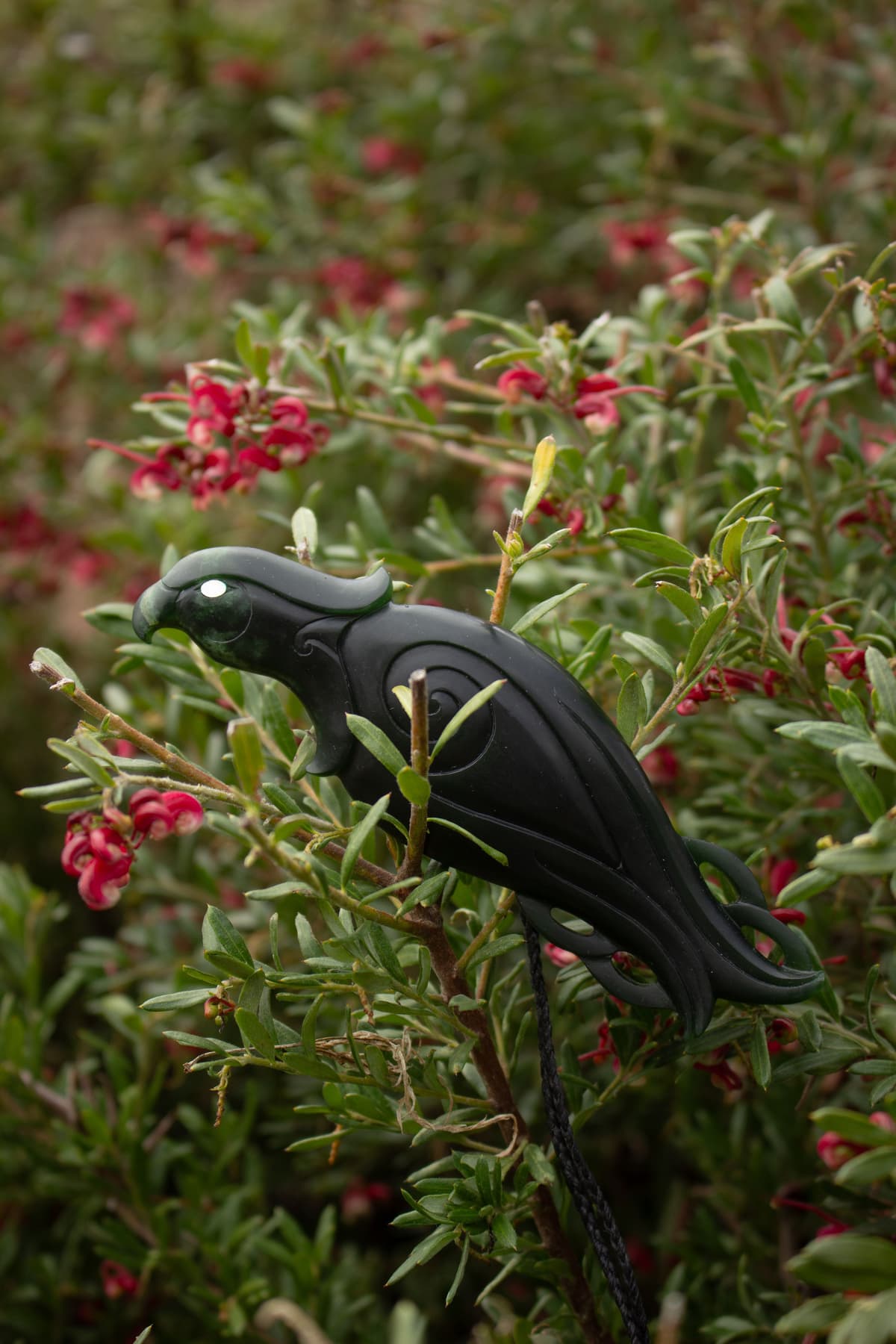
Ka tangi te tītī, ka tangi te kākā, ka tangi hoki ahau - the tītī calls, the kākā calls, I call also.
This kākā by Tamaora Walker depicts an endemic parrot of New Zealand, also known as the bush parrot or brown parrot. Found among the native forests of Aotearoa, the kākā is recognised for its strong, curved beak, rich brown and olive plumage, and flashes of red and orange beneath its wings. A lively and social bird, kākā are often heard calling from high in the forest canopy.
Kākā were kept as pets and were often used as decoys when fowling. Their red feathers were also highly valued by Māori for their association with rank and used in traditional cloaks worn by people of high status.
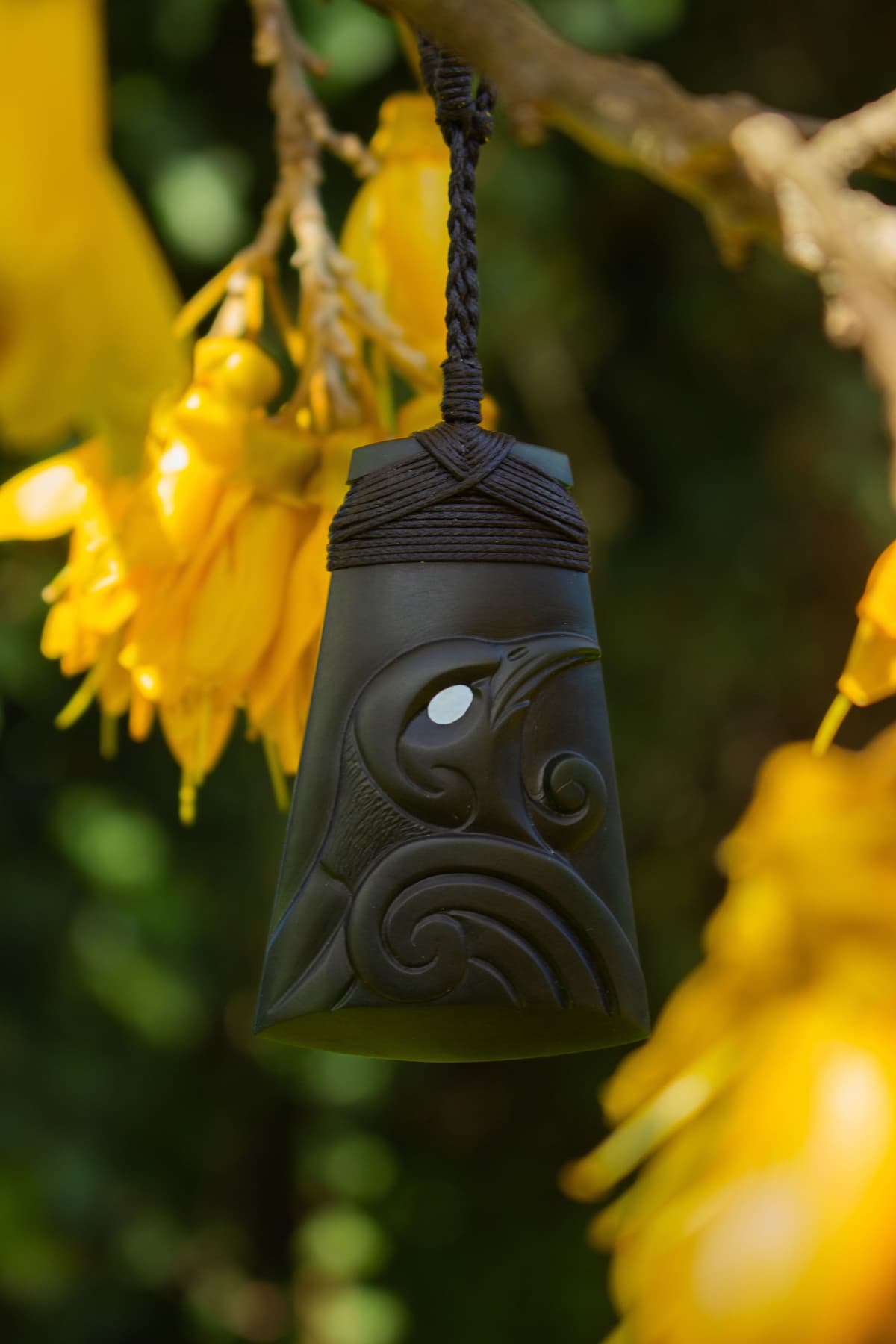
Me he korokoro tūī - like the throat of the tūī - refers to someone with a beautiful voice or an eloquent speaker.
This tūī by Akapita Scally is one of Aotearoa’s most recognisable native birds. Known for its glossy dark plumage and distinctive white throat tufts, the tūī is an accomplished songbird, with a complex range of calls and the ability to mimic other sounds.
Tūī play an important role in the ngahere, feeding on nectar, fruit and insects while pollinating native plants and dispersing seeds. Within Māori culture, the tūī is associated with communication and oratory, reflecting the importance of kōrero and the spoken word.
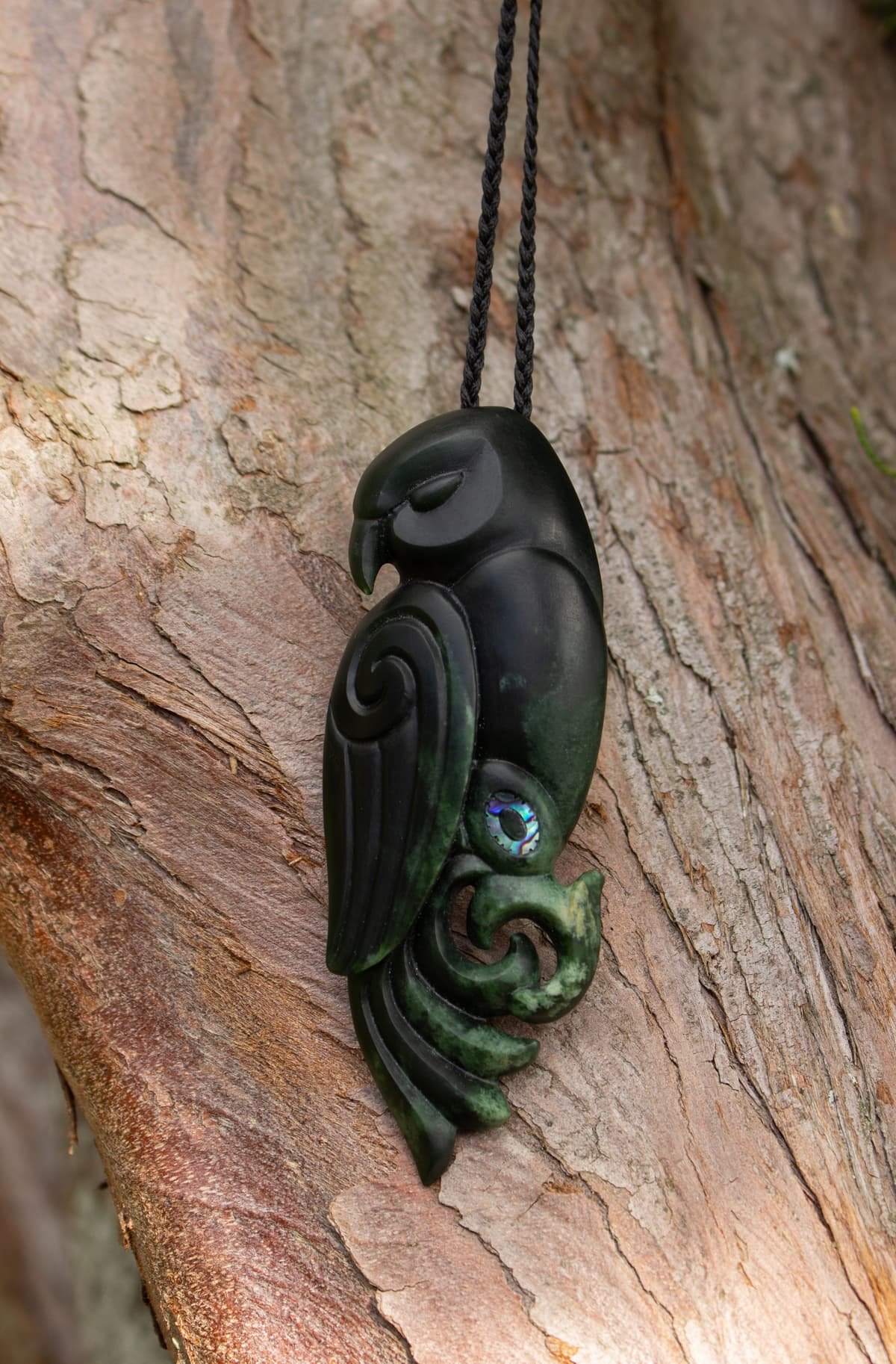
Me te pari hakoke - like a whēkau cliff
This whēkau crafted by Foua Aliki Tuielu depicts the extinct laughing owl of Aotearoa. Larger than the ruru, the whēkau had a distinctive face and a haunting call of repeated cries and shrieks.
The whēkau nested in caves, rock crevices and sheltered places. It disappeared in the early 20th century through habitat loss and introduced predators and is now remembered as one of Aotearoa’s lost manu.
Within Māori culture the whēkau’s distinctive call was regarded as a warning. Its name refers to entrails, reflecting its feeding habits on rats and birds.
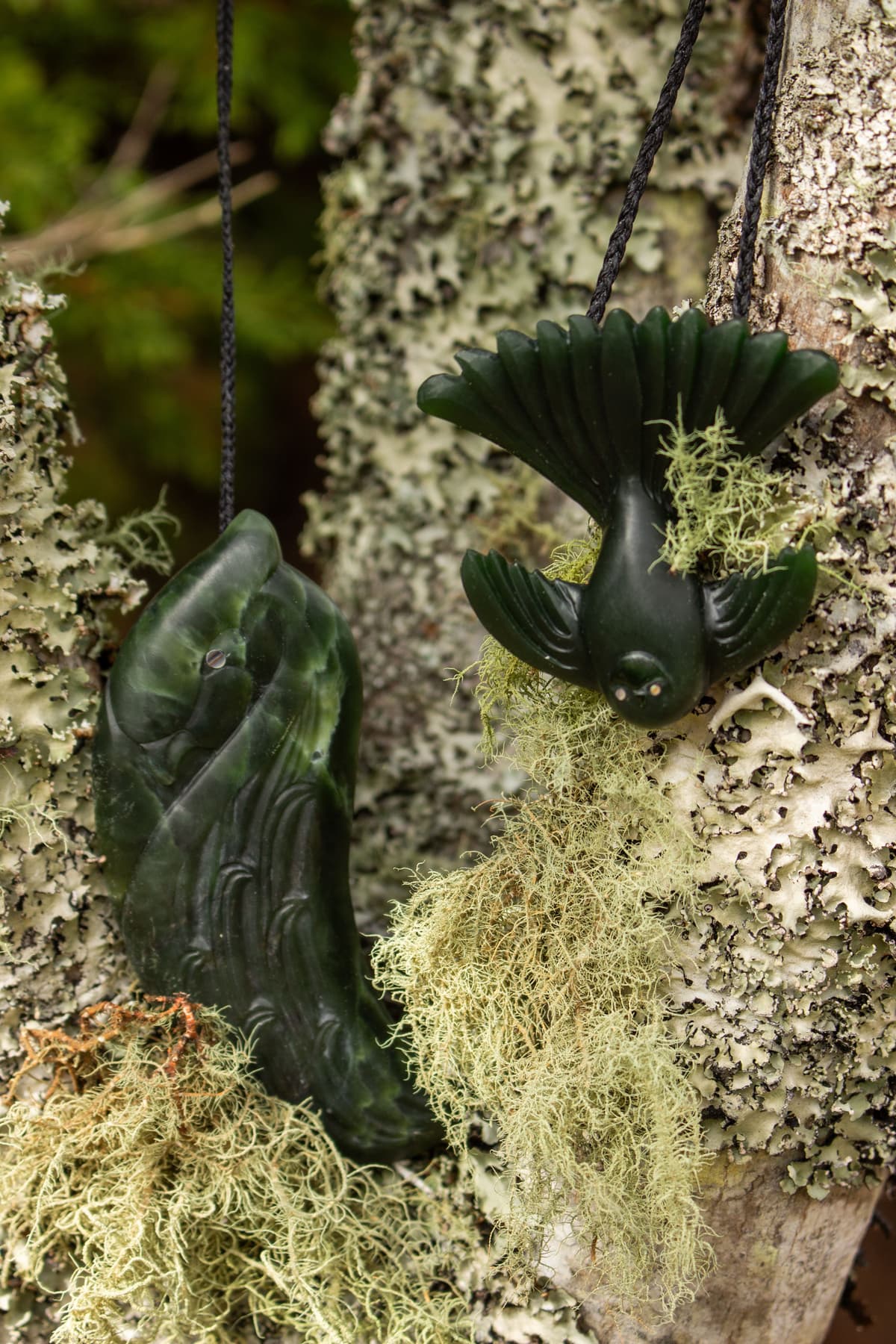
He tou tīwaiwaka! - You can’t sit still!
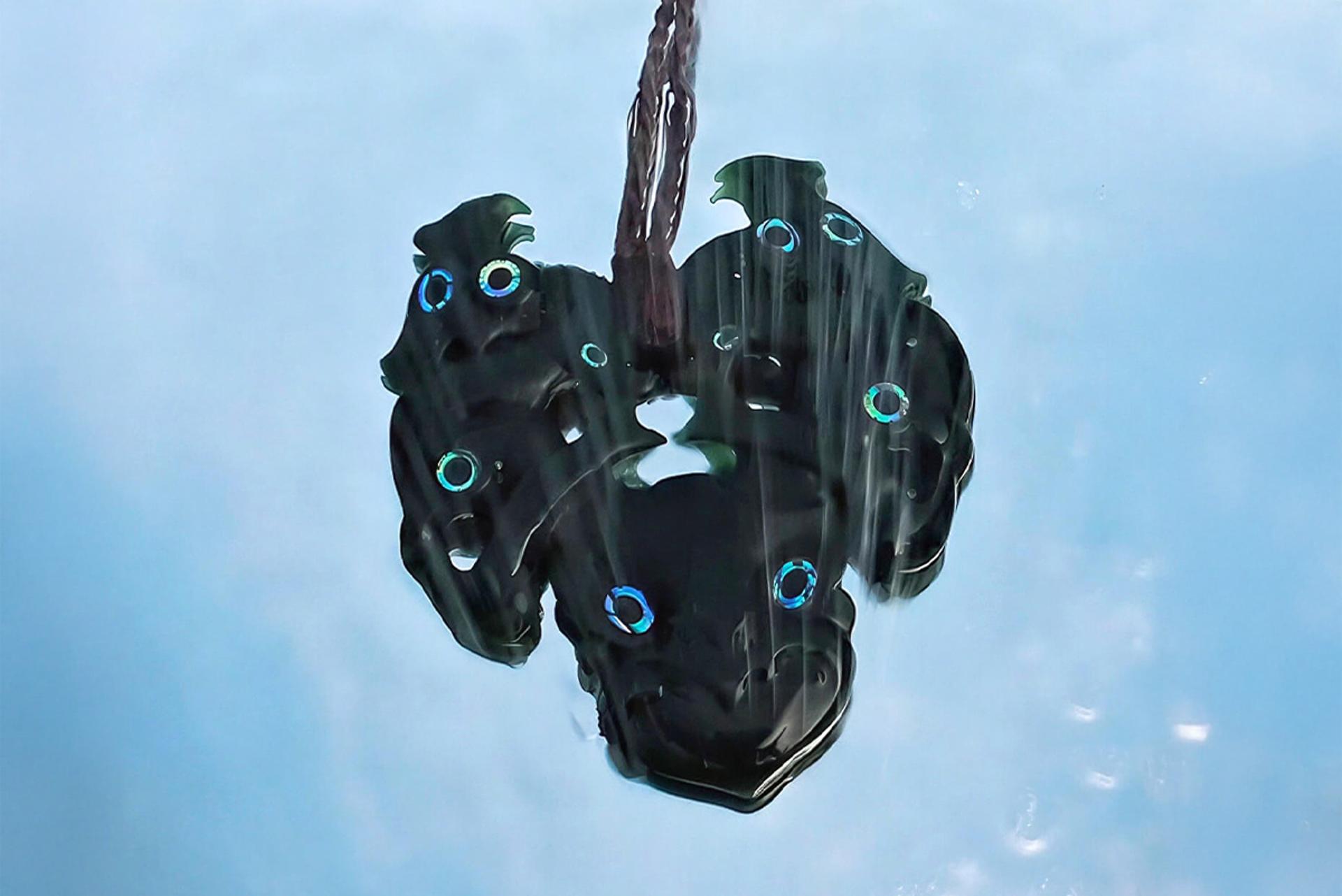
These pīwakawaka by Daniel Malcolm and Jason Vercoe depict Aotearoa’s lively and distinctive fantail. Watching a pīwakawaka hunt is mesmerising, it twists, dives and changes direction mid-flight, using its fanned tail like a rudder to catch insects on the wing.
Within some Māori stories, Māui transformed himself into a mokomoko (lizard) and entered Hine-nui-te-pō (goddess of death) in an attempt to overcome death and make humanity immortal. The pīwakawaka laughed and woke her, causing Māui to be crushed by her.
In some versions, Māui threw mud at the bird, leaving the dark markings seen today, across its body.
New Zealand Pounamu Niho with Piwakawaka Etching by Daniel Malcolm
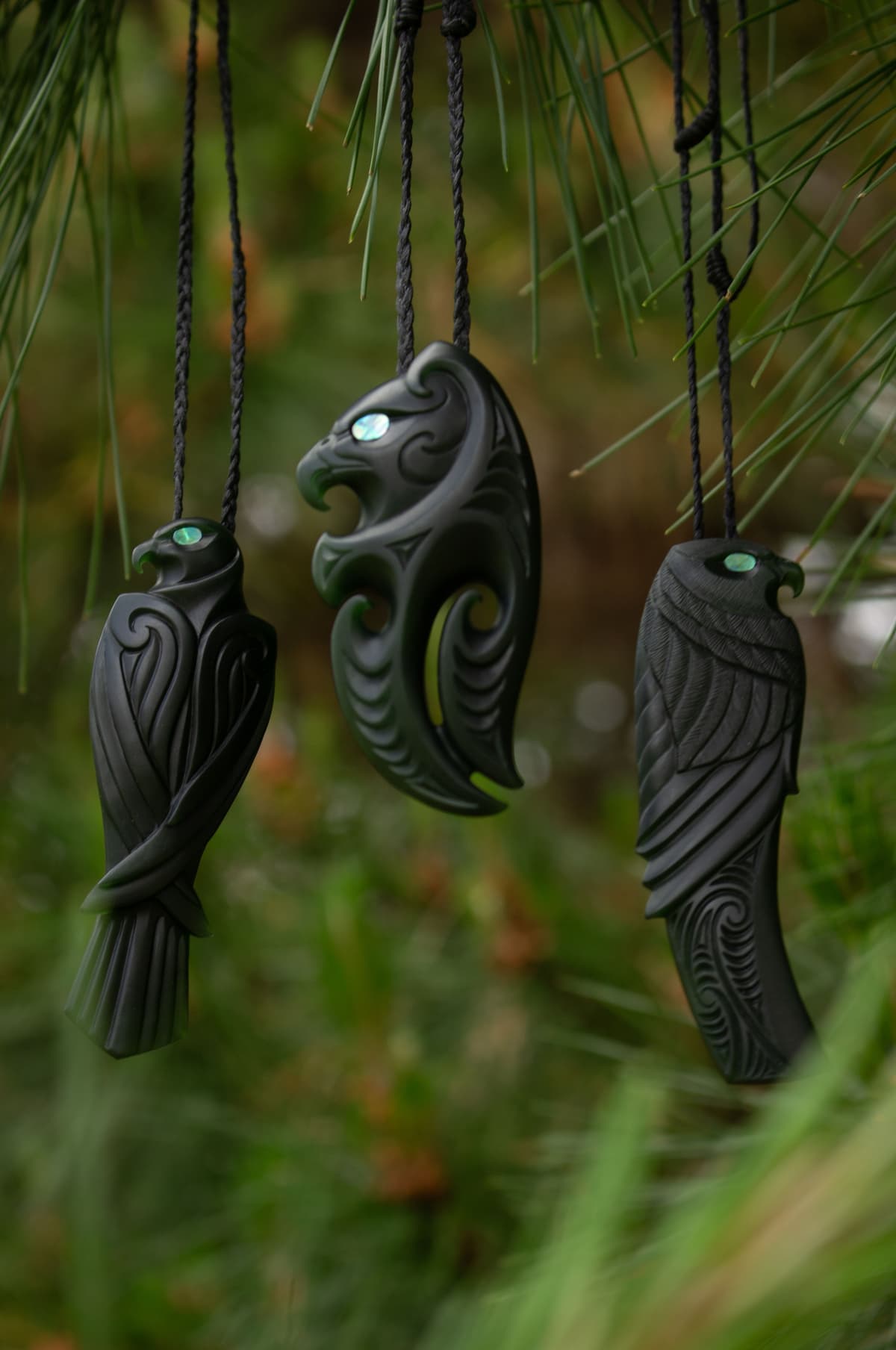
Ka tangi te kārewarewa ki waenga o te rangi pai, ka ua āpōpō. Ka tangi ki waenga o te rangi ua, ka paki āpōpō. - When a kārearea screams in fine weather, next day there’ll be rain. When it screams in the rain, next day will be fine.
These kārearea crafted by Akapita Scally depict Aotearoa’s endemic falcon.
A powerful and agile hunter, it is capable of reaching speeds of up to 200 kilometres per hour, making it one of the fastest birds in the country.
The kārearea holds an important place within Māori culture. Its distinctive call was understood as a tohu (sign) for changes in weather, and its bold nature is reflected in many whakataukī (Māori proverbs).
Today, the kārearea remains a taonga of Aotearoa, found across forests, mountains and open landscapes.
New Zealand Pounamu Karearea Pendant by Akapita Scally
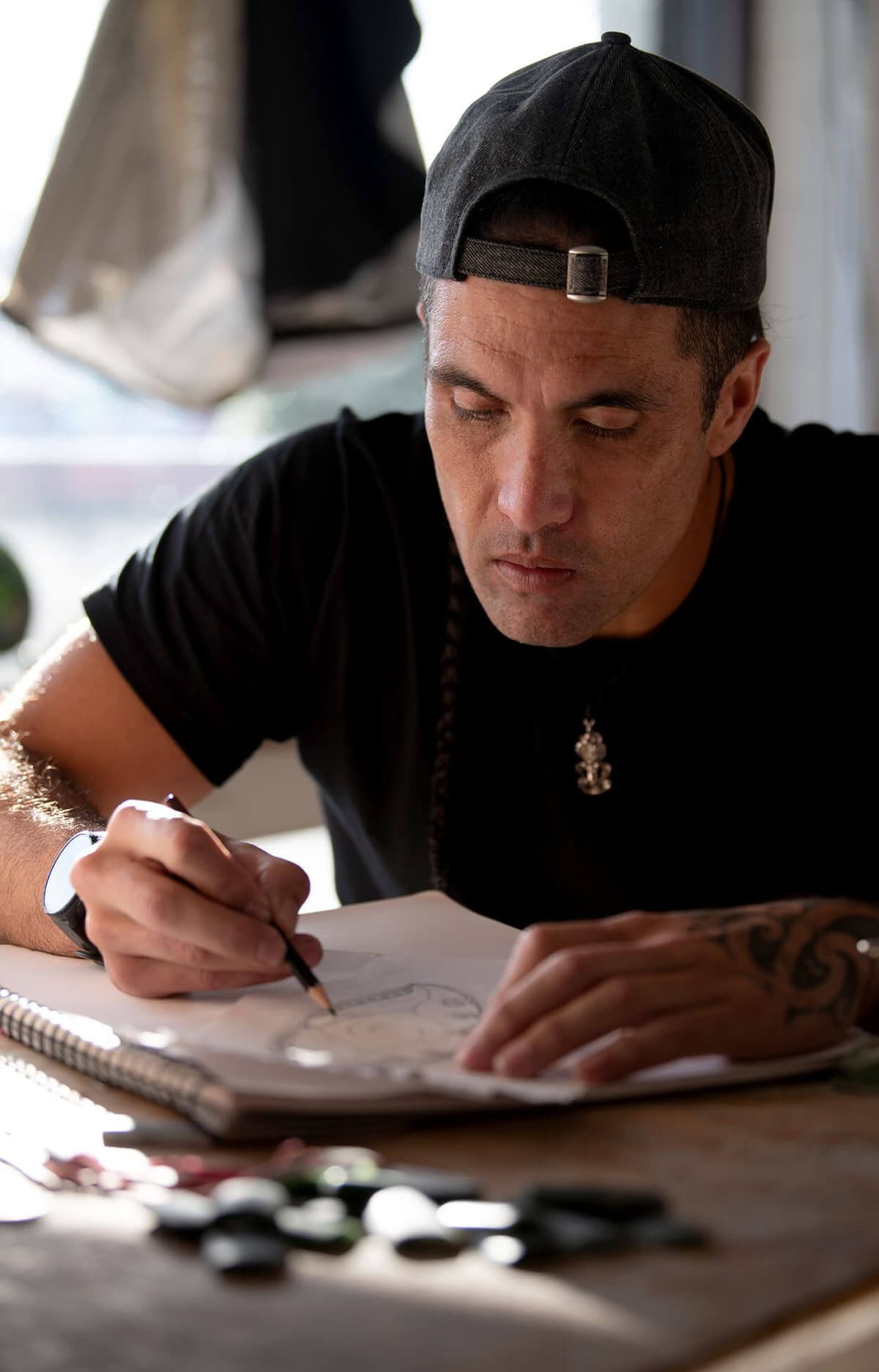
“Each piece carved by one of our own, renowned Rotorua Māori jade carvers”

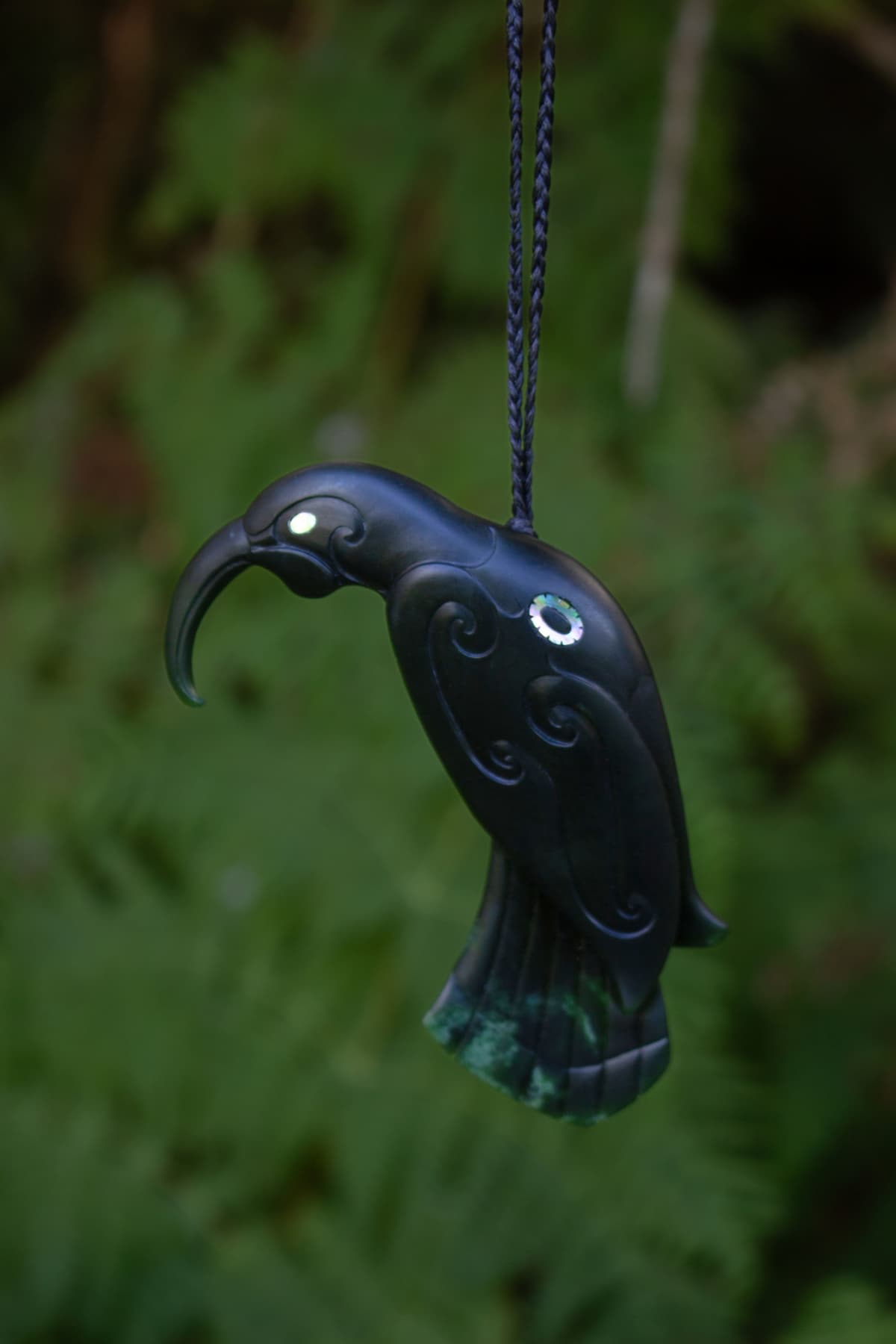
Huia e, huia tangata kōtahi - Bring people together, unite the people.
This huia by Tamaora Walker depicts one of Aotearoa’s most distinctive native birds. The huia was recognised by its glossy black plumage, white tipped tail feathers and orange wattles.
The huia held an important place in Māori culture. Its white tipped tail feathers were highly prized, worn by people of high rank as a mark of mana.
Huia became extinct in the early 20th century through habitat loss, introduced predators and increased hunting driven by European demand for their feathers.
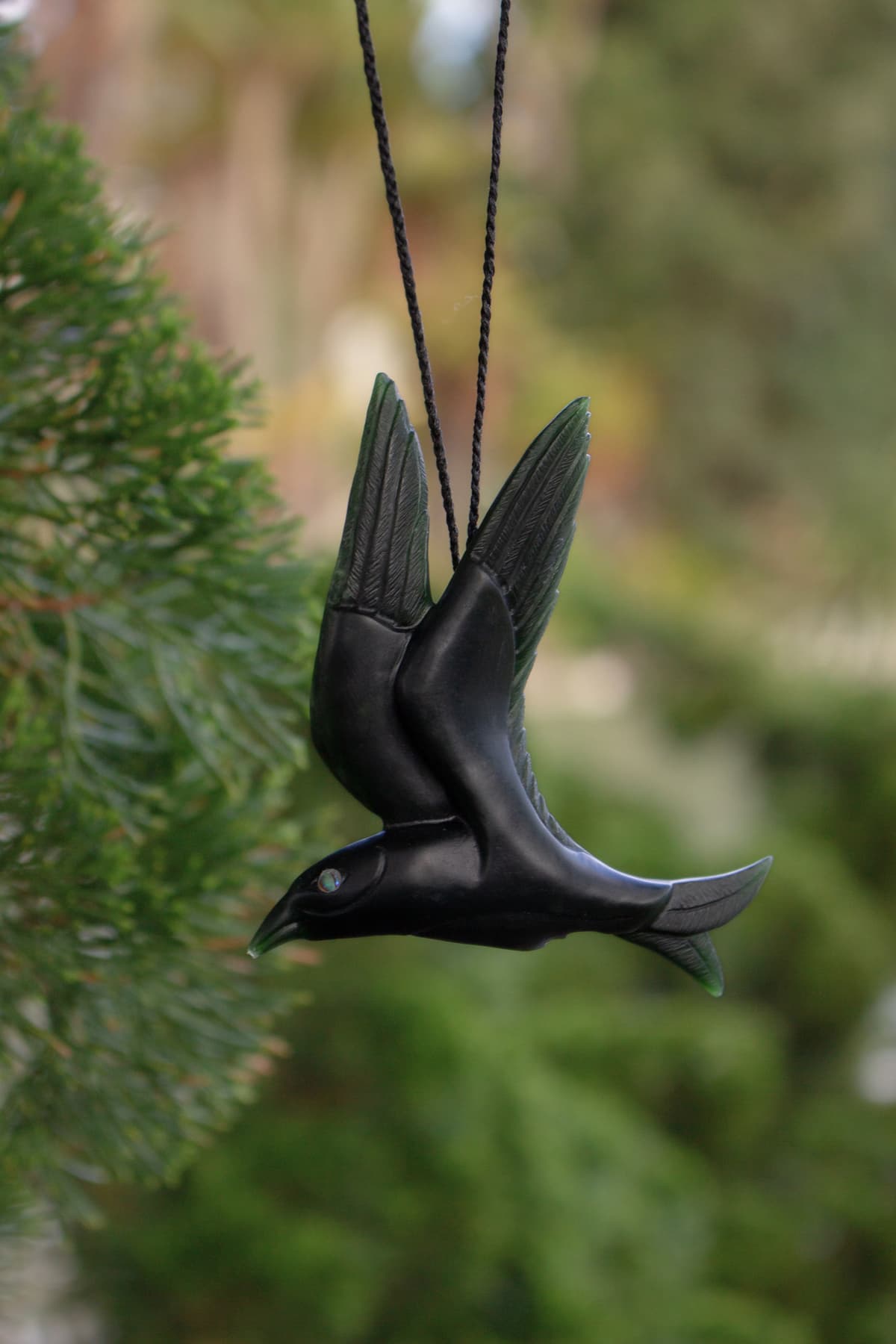
Tāhuna ā-tara - A sandbank of terns
This tara pirohe by Daniel Malcolm depicts the endemic black-fronted tern of Aotearoa. Found mainly along the braided rivers of Te Waipounamu, these agile birds hunt insects and small fish, nesting on exposed shingle banks.
In Māori culture, tara pirohe are associated with beauty, grace and high status. The expression tāhuna ā-tara, a sandbank of terns, was used to honour a gathering of chiefs, drawing a connection between the birds’ presence and the mana of those gathered.
Today, tara pirohe are nationally endangered, threatened by introduced predators and habitat loss.
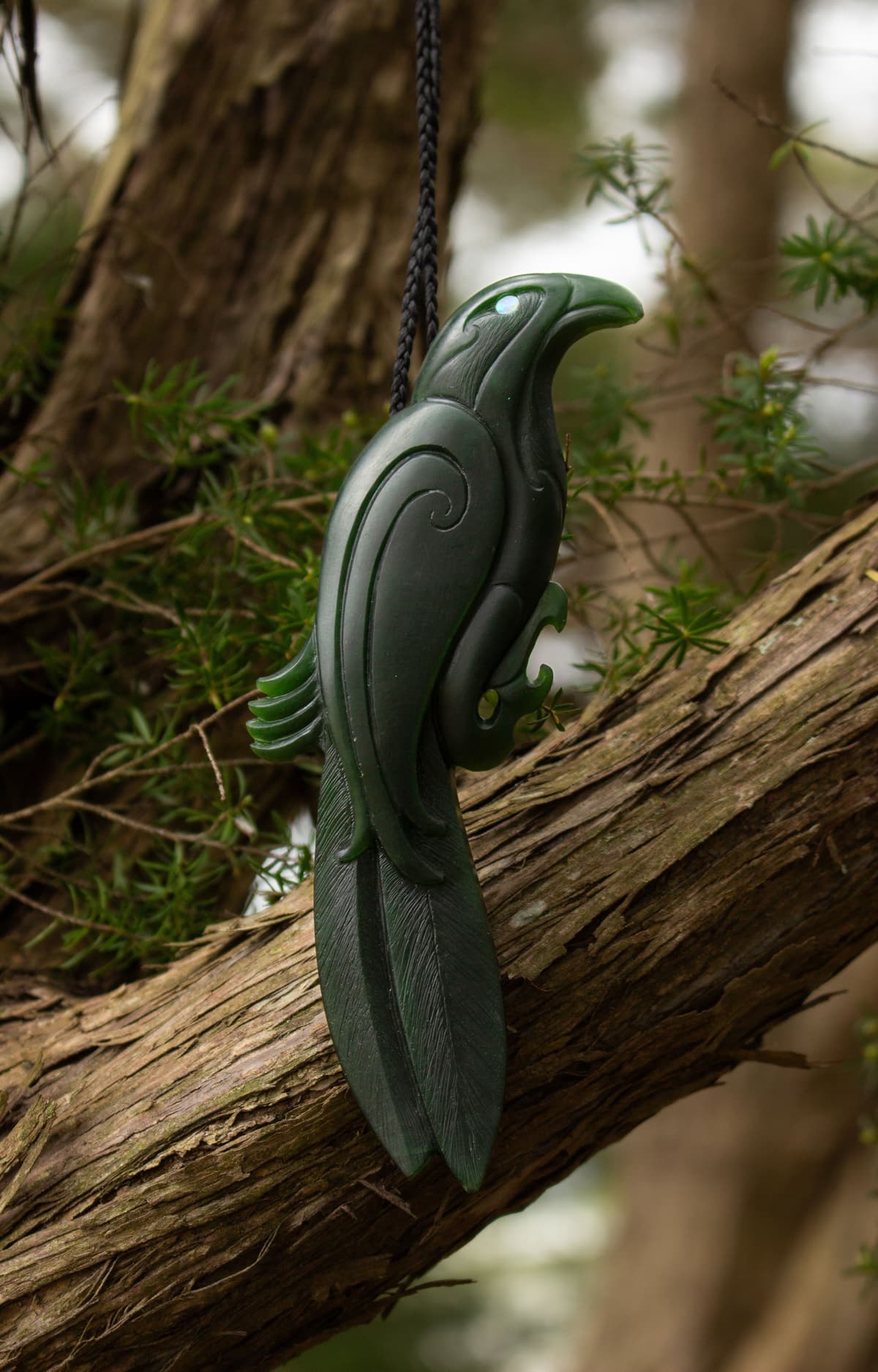
Ka rite koe ki te koekoeā - You’re irresponsible like the koekoeā.
This koekoeā by Dylan Hati depicts Aotearoa’s long-tailed cuckoo. Recognised by its long tail, copper-brown plumage and distinctive call, the koekoeā migrates thousands of kilometres between Aotearoa and across the Pacific each year.
Its arrival and call traditionally heralded the coming of spring, marking an important seasonal change. The koekoeā lays its egg in the nest of another bird, leaving its chick to be raised by its host. This behaviour features in Māori whakataukī, where the koekoeā became a metaphor for someone who avoids their responsibilities.

He kea ki pae maunga, he keorangi ki pae atamai - The mountain parrot sits atop the mountain and at the pinnacle of intelligence.
This kea crafted by Dylan Hati depicts Aotearoa’s alpine parrot. Found among the mountains of Te Waipounamu, the kea is recognised for its olive plumage, orange and red underwings and powerful curved beak.
Highly intelligent and naturally curious, kea are known for exploring their surroundings and solving problems using their strong beaks and feet.
It is said Māori encountered kea while crossing the Southern Alps in search of pounamu. To some tribes, kea are considered a guardian.
The kea is now nationally endangered, threatened by introduced predators and its ground-nesting habits.
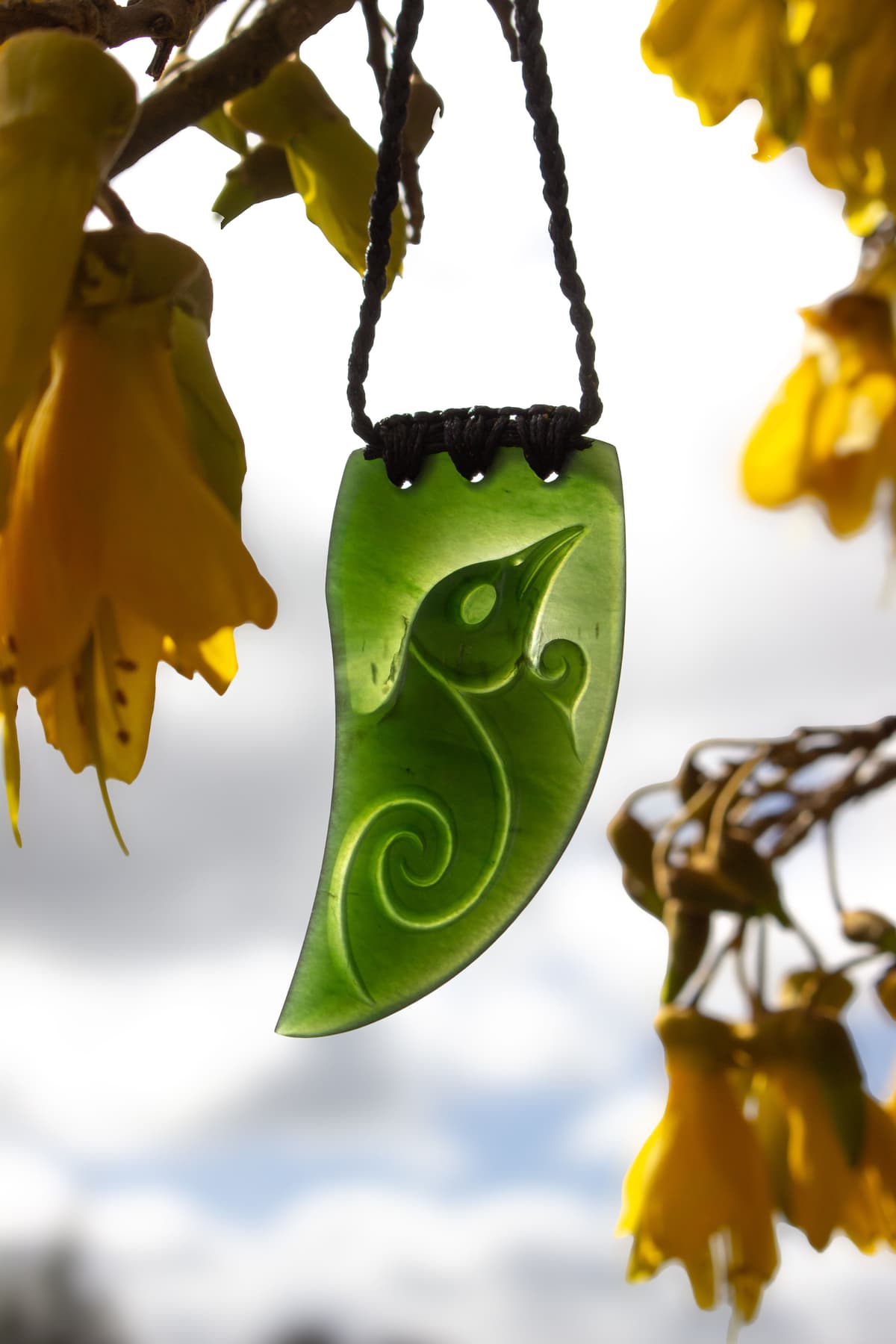
Me he korokoro tūī - like the throat of the tūī - refers to someone with a beautiful voice or an eloquent speaker.
This tūī crafted by Akapita Scally is one of Aotearoa’s most recognisable native birds. Known for its glossy dark plumage and distinctive white throat tufts, the tūī is an accomplished songbird, with a complex range of calls and the ability to mimic other sounds.
Tūī play an important role in the ngahere, feeding on nectar, fruit and insects while pollinating native plants and dispersing seeds. Within Māori culture, the tūī is associated with communication and oratory, reflecting the importance of kōrero and the spoken word.
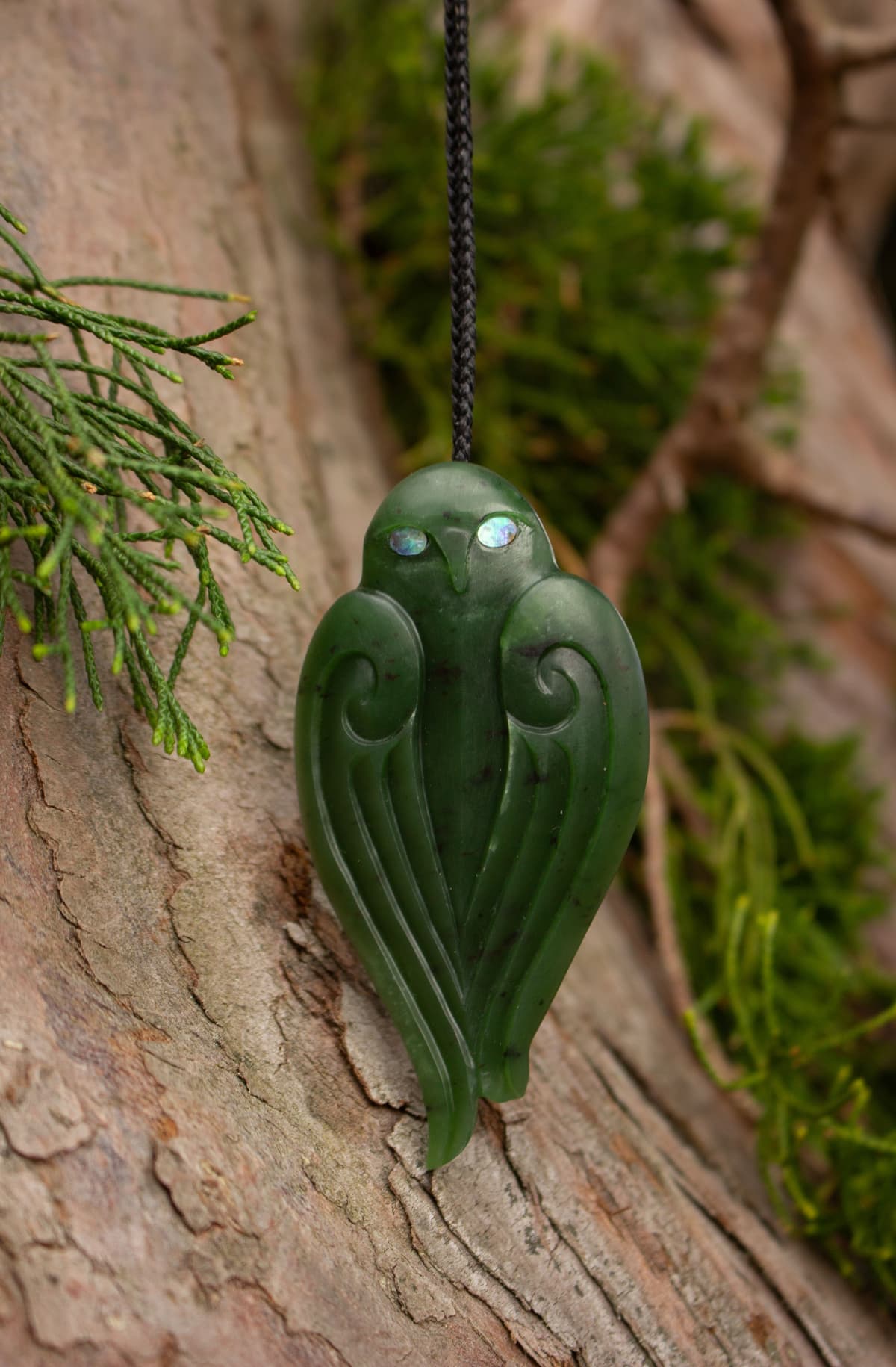
He ruru noho motu - Protect your independence and mana motuhake.
This ruru crafted by Tiakiwai Mauri Walker depicts Aotearoa’s native owl. A nocturnal hunter, the ruru is recognised by its large eyes, rounded wings and distinctive call, which carries through the ngahere at night.
Within Māori culture, the ruru’s calls were interpreted as tohu (sign). Different calls could carry different meanings, with the bird sometimes regarded as a guardian or messenger between the living world and the unseen.
The ruru remains a familiar presence in Aotearoa’s forests, where it hunts insects, birds and small animals under the cover of darkness.
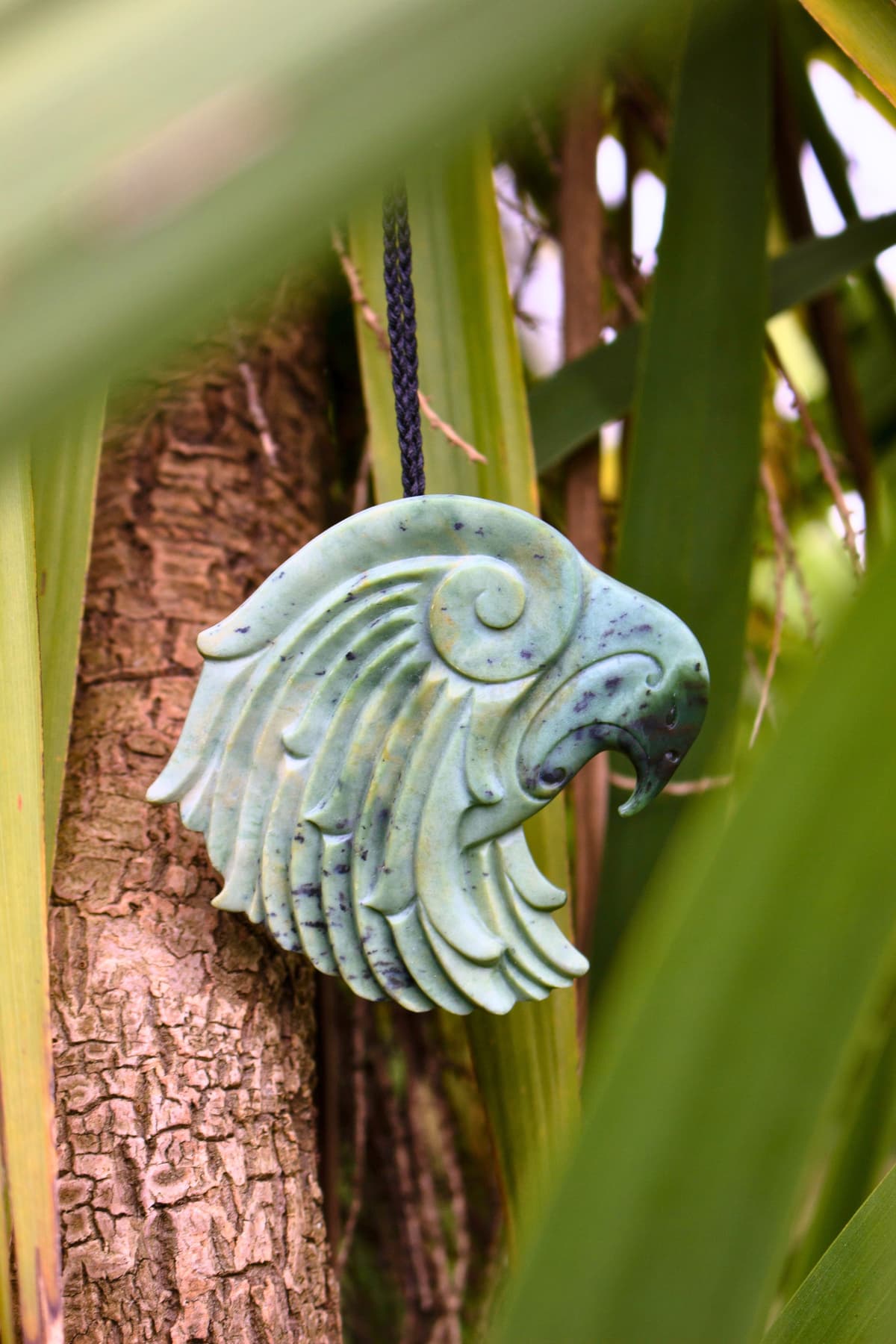
Poho kererū ana! - The chest of a kererū! - This whakataukī speaks to expressing a great sense of pride.
This kererū crafted by James Pirika depicts Aotearoa’s native wood pigeon. Recognised by its iridescent green and purple plumage, white chest and distinctive whistling wings, the kererū is one of the few native birds capable of swallowing large native fruits whole.
Kererū play a vital role in the ngahere, dispersing the seeds of native fruit trees such as miro, tawa and karaka. Within Māori culture, the kererū was valued as a source of food and feathers, as its feathers were used to adorn people of mana and status.
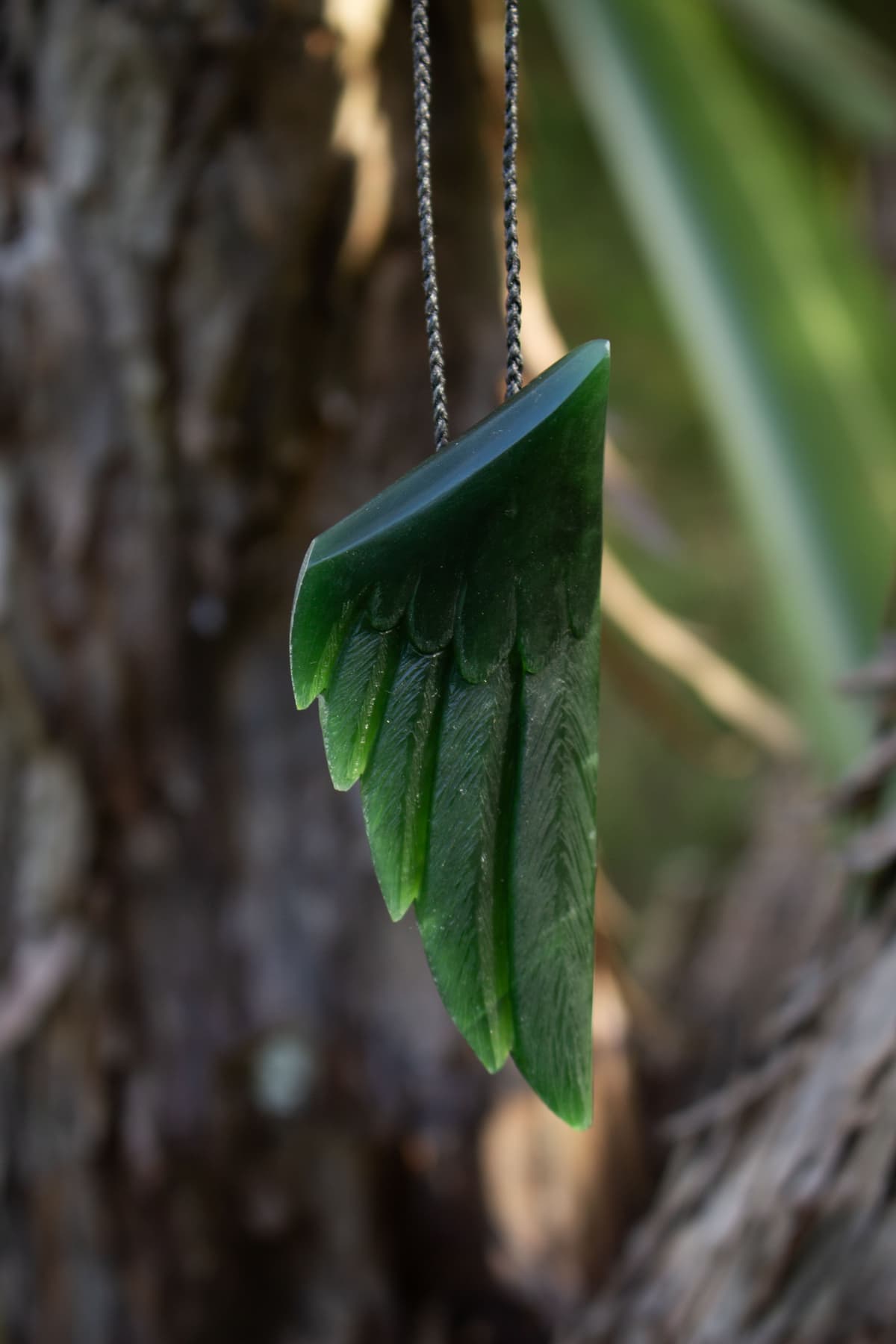
Ka rite koe ki te koekoeā - You’re irresponsible like the koekoeā.
This koekoeā wing by Dylan Hati depicts Aotearoa’s long-tailed cuckoo. Recognised by its long tail, copper-brown plumage and distinctive call, the koekoeā migrates thousands of kilometres between Aotearoa and across the Pacific each year.
Its arrival and call traditionally heralded the coming of spring, marking an important seasonal change. The koekoeā lays its egg in the nest of another bird, leaving its chick to be raised by its host. This behaviour features in Māori whakataukī, where the koekoeā became a metaphor for someone who avoids their responsibilities.